
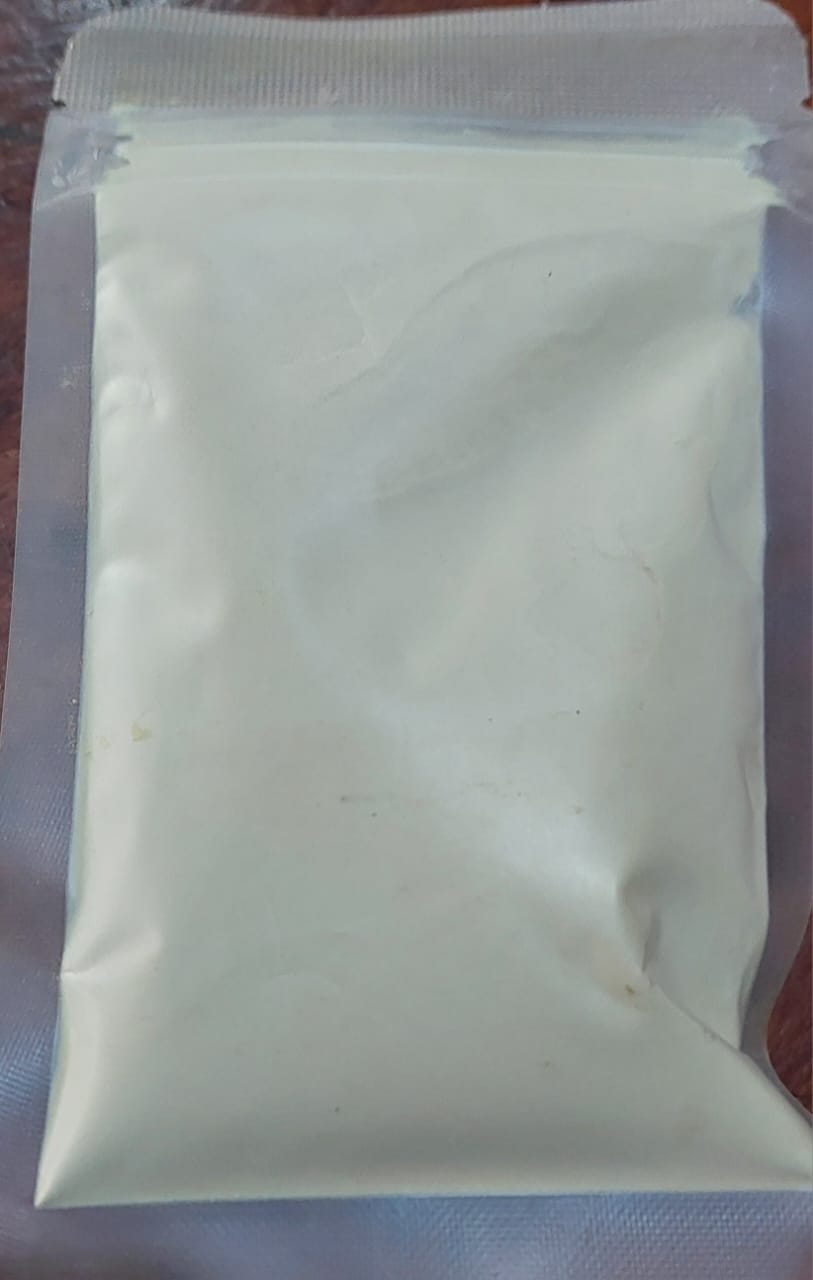
Hydroxypropyl Guar (HPG)
Price range: ₦2,800.00 through ₦120,000.00
Hydroxypropyl Guar (HPG) is made by modifying guar gum with hydroxypropyltrimonium chloride (GHTC) through a chemical reaction. HPG is a propylene glycol ether of Cyanopsis tetragonoloba. The addition of GHTC increases the water solubility and cationic charge of guar gum, resulting in an improved performance in hair care products. The modified Hydroxypropyl Guar is then dried and processed into a fine powder.
Hydroxypropyl guar gum (HP Guar) is a conditioning thickening and stabilizing agent derived from guar gum, a natural polysaccharide
It is a modified version with enhanced properties than guar gum.
It is more compatible, more soluble, and more stable with cosmetic ingredients than traditional guar gum.
It is non-comedogenic, non-toxic, and non-irritating.
Benefits
- Increases viscosity effectively
- Provides smooth skin feel and has characteristic high level of lubricity
- Has good film-forming properties
- Helps stabilize emulsions and has excellent salt and alcohol tolerance in aqueous solutions
- Can be used for gel products that can be pumped or sprayed
USAGE TIPS:
Option 1: Pre-dissolve in glycerin. Add to the blend of surfactant. Then add the water phase.
Option 2: Add HPG to water phase of formulation, mix well, and neutralize the pH to increase viscosity.
Usage level 0.1-1.5%. For external use only.
Applications
Gels, lotions, skin creams, make-up, hair care products.
pH: 6.5-7.5
Charge : Non-ionic
Incompatibilities
Strong Oxidizing Agents: HPG is incompatible with strong oxidizers, which can cause reactions, potentially leading to combustion in powder form.
Extreme pH Levels: While it is stable across a broad pH range (typically pH 4.0 to 10.5, with an ideal formulation range of pH 5.0 to 9.0), highly acidic or alkaline conditions outside this range can affect its stability and thickening properties.
High Salinity Water/Strong Electrolytes (for ionic forms): High concentrations of strong electrolytes or metal cations in the water phase, especially when hydrating the gum, can interfere with the polymer’s chain expansion through electrostatic interactions, leading to reduced viscosity and poor swelling properties.
High salinity
| Weight | 1.5 kg, 10 kg, 100g, 10g, 150g, 1g, 1kg, 2 kg, 2.5 kg, 200g, 20g, 25 kg, 250g, 25g, 260g, 3 kg, 3.5 kg, 30g, 4 kg, 400g, 5 kg, 500g, 50g, 5g, 70g, 750g, 800g, Can (370g) |
|---|
Related products

Avocado butter
Price range: ₦1,500.00 through ₦18,000.00
Beeswax -Yellow pellets
Price range: ₦2,500.00 through ₦22,500.00
Cetyl Alcohol
Price range: ₦700.00 through ₦8,500.00 Clear Xanthan Gum
Price range: ₦3,500.00 through ₦40,000.00
Guar gum
Price range: ₦1,200.00 through ₦18,000.00Olivem 1000
Price range: ₦3,500.00 through ₦30,000.00
Ritamulse SCG
Price range: ₦3,000.00 through ₦45,000.00 
Reviews
There are no reviews yet.